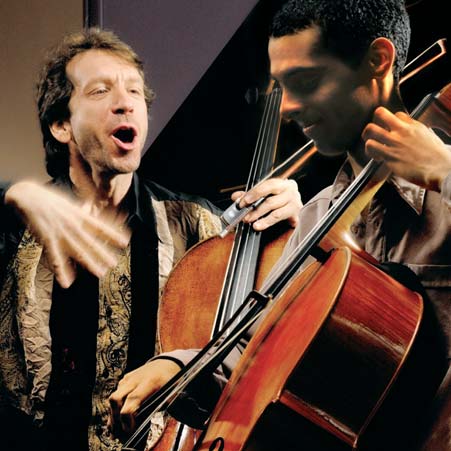
Camerata Asolo - The International Academy for Music in Performance
“Performance traditions, handed down by great performers and teachers through example, form our only link to the origins and development of great music. This information, which is not and cannot be contained within the written musical score, is as precious and vital to us today as a fresco on an ancient building. It is equally fragile. We lose it at our peril.” Norbert Brainin
WHAT? An International Forum and Festival for Concert Artists
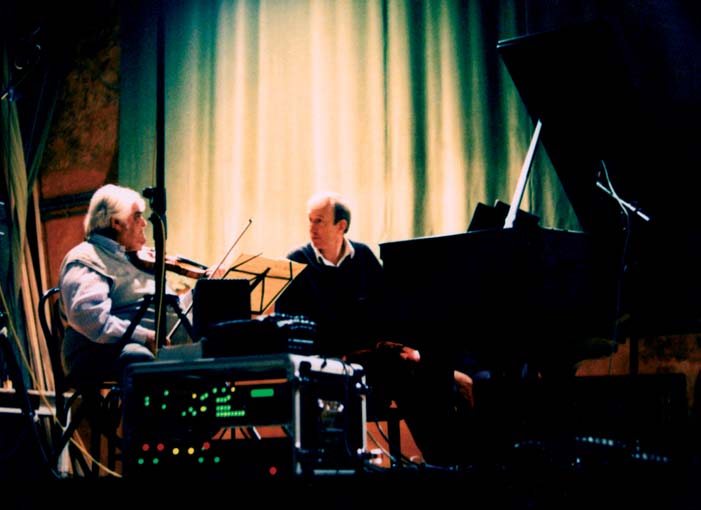
The aim of Camerata Asolo(CA) is to establish a centre of excellence in the form of a creative environment where today’s great concert artists can work, independently or in collaboration, to document, apply and develop essential performance practices and traditions currently at serious risk of disappearing and pass them on to young performers of exceptional talent. An audio visual documentation, captured using specially developed technology, will form the first digital archive and networked knowledge tool of its kind and will be made accessible to music students, professional musicians, musicologists and music lovers worldwide.
WHY? To Conserve Great Performing Traditions for the Future
Camerata Asolo is the result of the collective conviction and experience of some of the greatest exponents of classical music performance of the 20th century. Their musical understanding grew out of an age of entirely different human and creative proportions. Our fast changing world is placing the creative and spiritual ideals of the past under unreasonable pressure. Many of these artists have recognised the urgent need to conserve fundamental musical principles to guarantee the future of a cultural heritage under threat. New technology can capture, manage and diffuse this knowledge without distorting its purity.
Camerata Asolo has two approaches:
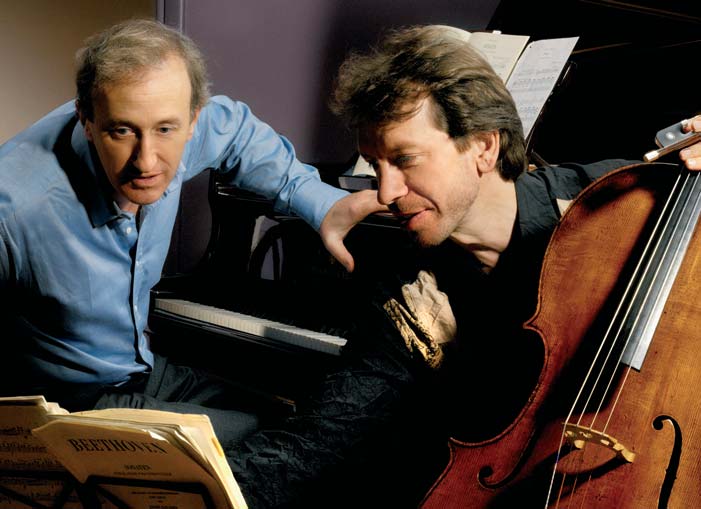
The creation of a pure musical community conceived by musicians for musicians, employing new technology that will capture, unobtrusively, the creative process audio visually, the first artistic knowledge asset tool of its kind. This tool can be sourced by a limitless number of musicians worldwide without geographical or economic constraints.
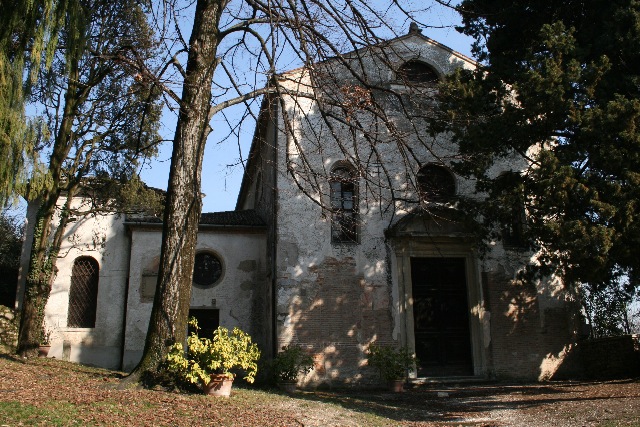
WHERE? The Renaissance Hilltown of Asolo, Italy
Camerata Asolo is situated in the beautiful Italian Renaissance town of Asolo, north-west of Venice. Established by Norbert Brainin, founder of the legendary Amadeus Quartet, it is supported by the Norbert Brainin Foundations which are based in Italy, United Kingdom, and USA.
HOW? Through Teaching, Studying, Performing
a) Teaching - Performing artists who should be teaching the most interesting talent are not able to dedicate the necessary time due to career pressures. With an Academy, CA will create the ideal conditions for these same artists to devote the right amount and quality of time to their teaching.
b) Creativity – CA will offer major concert artists a musical home in the shape of a Forum where they can together realise performance projects free from market forces that hinder their creative goals.
c) Cultural Heritage – Performance and interpretative traditions in classical music represent a vital cultural heritage. No comprehensive record of this musical inheritance exists today. This will be resolved by creating an archive that sources its content from the Academy’s and Forum’s activities.
Four Key Areas of Activity
1. Academy
“Musical performance, even if of the highest technical standard, risks losing touch with the original intentions of the composer. The dynamic between musical intentions and performance has been dissipated” Norbert Brainin
Who for?
Camerata Asolo will invite, free of charge, up to 36 exceptionally gifted young musicians to live and work for six months a year, over a period of one to three years. The students will be chosen on merit alone from international auditions presided over by master musicians with whom they will work. These master musicians have agreed to dedicate more time than is offered anywhere, employing flexible and personalised teaching methods thus nurturing talent that cannot easily be fostered in large institutions. This will focus in particular on the spiritual, intellectual and expressive aspects of classical musicianship that are endangered by modern day pressures, offering the opportunity to develop as soloists and chamber musicians, rehearse and perform alongside their tutors, witness their tutors at work from close by and use the Academy’s archive and recording facilities. Ever fewer teachers are versed in essential historic performance practices and traditions as expressed through years of performance experience. The result has been a gradual dilution and alteration of the fundamentals of the performance art.
Since performance is central to the understanding of music, the effect of a divergence of performance and teaching worlds risks misleading young musicians in their understanding of the fundamentals of interpretation. The Academy aims to resolve this situation.
2. Forum
“The creative performer’s role grows from a deep engagement with the spiritual and philosophical essence of great music. Many musical truths contained within oral traditions are currently in serious danger of disappearing.” Norbert Brainin
The Forum will offer top concert artists a musical home where they can realise creative projects free from economic and time pressures. This select group of great performing artists will work together to define, document and discuss fundamental principles of classical music performance and apply them to special projects that benefit the Archive. The Forum will explore performance practices, the methods and techniques of interpretive artists and the sources on which they draw so as to more effectively pass them on to young future talent. This testimony will be endorsed by other great musicians invited to document their thoughts and experience.
3. International Festival
Every Spring, at the close of each academic year starting in 2008, CA will hold an International Festival based on the previous year’s activities, providing an annual showcase for the Academy and the Forum. A documentary film to be shown during the Festival will use Archive audio visual recordings to summarise each year’s achievements. All Festival performances will be recorded for the Archive.
4. Archive
The Archive will contain closely indexed audio visual information on all aspects of the interpretative and instrumental art: discussions, interviews, lessons, master classes, rehearsals and performances generated within CA. It will be designed, in collaboration with Columbia University, New York, to benefit music students, professional musicians and musicologists worldwide. Its aim is to make this material available in the kind of specific categories essential for advanced study.
We consider that, until now, the main weakness of online teaching in music has been the lack of analysis of material. Showing entire master classes, without categorisation or detail, is of limited value. The same is true of recordings, historic and otherwise, which by necessity are achieved through a complex series of technical processes which filter the true experience. The advanced technology we plan to use will remove such filters and lay bare the original process as never before.
Technology: A Networked Knowledge Tool
A pioneering ‘Studio Asolo’, using superior state-of-the-art technology, will record and make available the Archive (see above) to students, professional musicians, musicologists or other interested parties at all levels, through subscription.
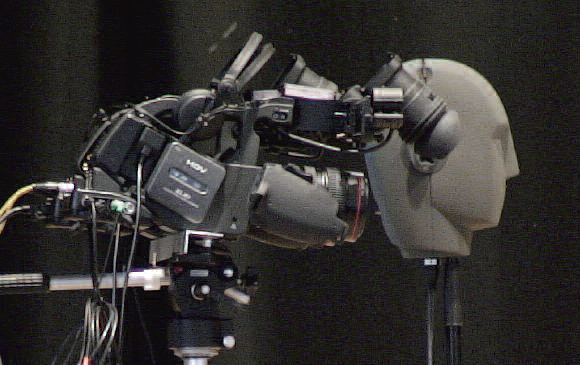
CA is determined to apply the principle of `real sound’ so as to produce Archive material, fully cross-referenced and catalogued, that is a precise audio representation of the musicians’ art.
A production centre is under development to allow CA to establish a standard of audio visual data, as well as supporting video audio, audio, stills, text etc, of the highest quality.
The technology will therefore create a versatile, high-quality monitoring environment for use during recording and postproduction of the material, which could be reproduced elsewhere to allow high-quality playback of the archive material by associates.
The recording studio and production centre will be sited in an historic palace in the centre of Asolo and will include a replay environment, editing facilities and digital storage capacity.
CA will retain ownership of its intellectual property.
CA will carefully manage the technology developments that will set standards far above those utilised in this sector to date.
CA will form associated business entities to allow the technology developments’ commercial potential to be responsibly exploited. It is forecast that a flow of revenue can be generated to support the foundation’s activities.
Conclusion
Camerata Asolo will:
• Nurture and conserve a vital cultural heritage.
• Initiate an innovative method for sharing and disseminating this heritage.
• Generate and, through advanced technology, record, exceptional artistic material with the support of top performers and teachers.
• Offer an inspiring location in the Italian hill-town of Asolo.
• Achieve financial independence through intelligent use of Camerata Asolo’s intellectual property as well as the technology solutions developed for the management of artistic and academic knowledge.
• Forge links with musicians, not only in Europe and in America but, responding to the growth of classical music in China and South East Asia, across the world.
A Social Enterprise
"A non-profit venture that combines the passion of a social mission with the discipline, innovation and determination commonly associated with for-profit businesses"
Camerata Asolo has been advised that this project lends itself to operating as a ‘Social Enterprise’.
• Camerata Asolo - Fondazione Norbert Brainin is a non-profit organisation and will continue to raise funds, along with its two satellite foundations, through non-profit channels.
• Camerata Asolo can respond to an identified need for carefully prepared and disseminated musical knowledge and in doing so produce revenue to help support its initiatives.
• Advice has been sought to clarify the financial aims of the Social Enterprise so as not to compromise the project’s ethos. This determination is expressed in the form of a ‘Charter’.
• A company structure has been recommended that clearly defines the relationship between the foundations and the commercial entities.
Why is this project important?
cultural heritage - the first documentation and definition of performance traditions and practices in Classical Music captured, managed and presented through use of new technology for the benefit of a large and easily identifiable market.
teaching methods - major concert artists who are prepared to pass on knowledge within a unique creative community specifically dedicated to safeguarding classical music performance.
new direction - Camerata Asolo is a major new departure that will help generate new audience and interest in classical music.
music/technology - a well-balanced marriage of new technology with an arts orientated project.
need - China and South-East Asian countries in particular have an urgent need for knowledge of this kind, hence the resulting networked learning tool access will initially target this area.
other applications - the application of bespoke technology and knowledge management systems will explore new solutions to the problems inherent in the presentation of academic and artistic knowledge.
social enterprise - the aim is to achieve financial independence through the discipline, innovation and determination commonly associated with for-profit organisations combined with the passion of a social/artistic mission.
management - the experience and commitment of the Foundation’s professional management team combined with the technical and business acumen brought to the technical development adds an additional determining factor to the project’s success.
Organisation - Camerata Asolo
Fondazione Norbert Brainin (Italy)
| Prof. Giovanni Bazoli | Honorary Chairman |
| General Council: | |
|---|---|
| Sir John Shepherd | Chairman |
| Barbara Meynert | |
| Norbert Brainin Foundation UK | representative Keith Hatchick |
| Norbert Brainin Foundation US | representative Eden Collinsworth |
| Executive Committee | |
| Clive Britton | CEO/Artistic Director |
| TBC | Finance Director |
| TBC | Development Director |
| Guido Larcher | Consultant Administrator (Italy) |
| Jo Carpenter | Head of Press and PR |
Norbert Brainin Foundation (UK)
| Board of Trustees: | |
|---|---|
| Sir John Shepherd | Chairman |
| Clive Britton | Artistic Director |
| Keith Hatchick | General Counsel |
Norbert Brainin Foundation (US)
| Board of Trustees: | |
|---|---|
| Sir John Shepherd | Chairman |
| Clive Britton | Artistic Director |
| Eden Collinsworth | Vice President, Cross Media Business Development Hearst Corporation |
| Keith Hatchick | General Counsel |
| Naomi Levine | Chairman, Centre for Philanthropy New York University |
International Board of Advisors
| Cesare Capitani | Ambassador, Italian Foreign Office |
| Desmond Cecil | former Senior Diplomat |
| Schuyler Chapin | former Managing Director, Metropolitan Opera New York |
| Roberto Danino | former Senior Vice President and General Counsel World Bank |
| Daniele Ferrazza | Mayor of the City of Asolo |
| Lord Foster of Bishop Auckland | Life Peer, member House of Lords |
| Wilhelm Hartung | Wilmer, Cutler, Hale and Dorr |
| Mathias Hink | Financial Advisor for media & arts |
| Paul Kellogg | Managing and Artistic Director, New York City Opera |
| Nigel Kent | Managing Director, Wunderman iMpact, WPP |
| Fiona Maddocks | Arts Journalist |
| Clive Marks | Chairman, London College of Music |
| Clara Menaldino | Chairman NY Chapter International Friends Van Cliburn Competition |
| David Mitchell | Financial Consultant |
| Priscilla Morgan | Trustee Isamu Noguchi Museum New York |
| Curtis Price | Principal, Royal Academy of Music, London |
| Felipe Propper | Senior Vice President, Investments, Smith Barney |
| Simon Thomas | Thomas Murray |
| Mariuccia Zerilli Marimó | Philanthropist |
| Marino Zorzi | Director, Biblioteca Marciana, Venezia |
Contact Details
Camerata Asolo - Fondazione Norbert Brainin (Italy)
via Robert Browning, 141
31011 Asolo (TV)
t: +39 0423 951236
e: info@CamerataAsolo.org
Norbert Brainin Foundation (UK)
17 Bentinck Street
London, W1U 2ES
t: +44 (0)20 7224 2466
e: nbfuk@CamerataAsolo.org
Norbert Brainin Foundation (US)
350 West 14th Street, Suite 6B
New York, NY 10014
t: +1 917 681 3016
e: nbfus@CamerataAsolo.org